Shape of
Silences
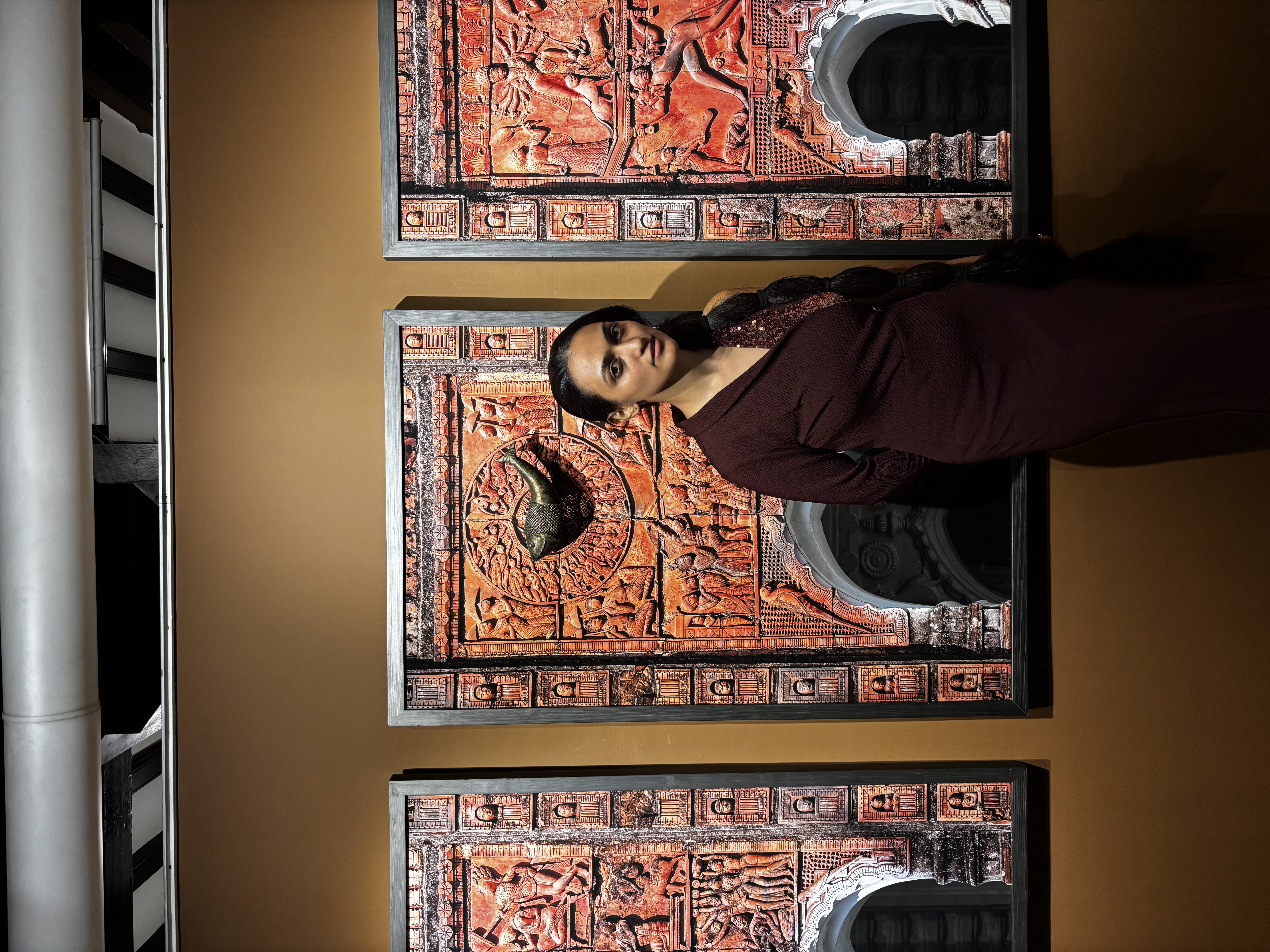
Photographs of Bengal’s terracotta temples by Sanjay Das, curated by Ina Puri.
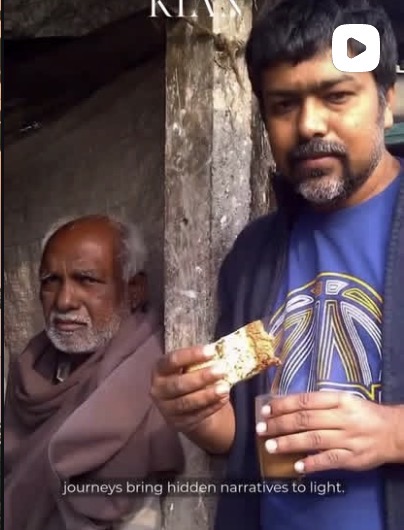
Sanjay Das
An advertising professional turned fine art photographer, Sanjay trained at the College of Art, New Delhi. Photography has been his passion since college, and his practice now spans more than two decades of national and international shows.
India’s cultural diversity and its many customs have been his lasting inspiration: bringing forth the untold stories this country has to offer.
Imagery that tells a story in colour, texture, light and shadow. A blend that is spiritually as well as mentally rewarding.
Theoretical and conceptual assertions merge with experience and fascination to form the image, and its meaning.
Born 4 July 1969, New Delhi. Lives and works in New Delhi, India.
On Shape of Silences
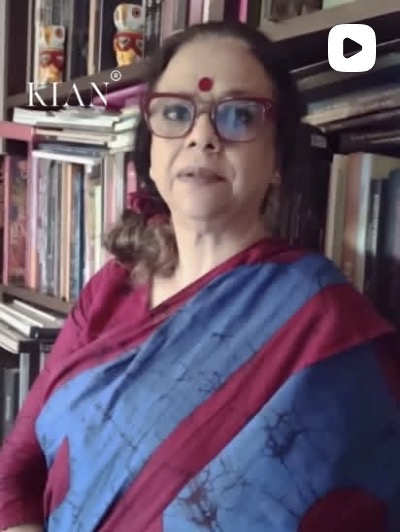
Revisiting Sanjay’s archives of photographs, over time, I have felt that to do justice to his work, the curator’s endeavor should be to present an exhibition that takes the viewer on a journey with the photographer, to make the viewing experience truly immersive.
Having worked with him earlier, I have known how his art evolved over the years: days of travel on roads across Bengal in search of the art, crafts and heritage he was determined to document.
He often reminisced about the discoveries he made when local people introduced him to the craftsmen, the fishermen, the artisans, weavers, musical instrument makers and performance artists. Often he would buy ‘dokra’ figurines, clay dolls, bead ornaments or locally woven mats and ‘gamchhas’, if only to pay the seller something in return.
Villagers hospitably shared their modest homes with him, showing him a world few outsiders had seen. Once, with Durga Puja approaching, he gifted us a little ‘dokra’ Durga made by village metal craftsmen.
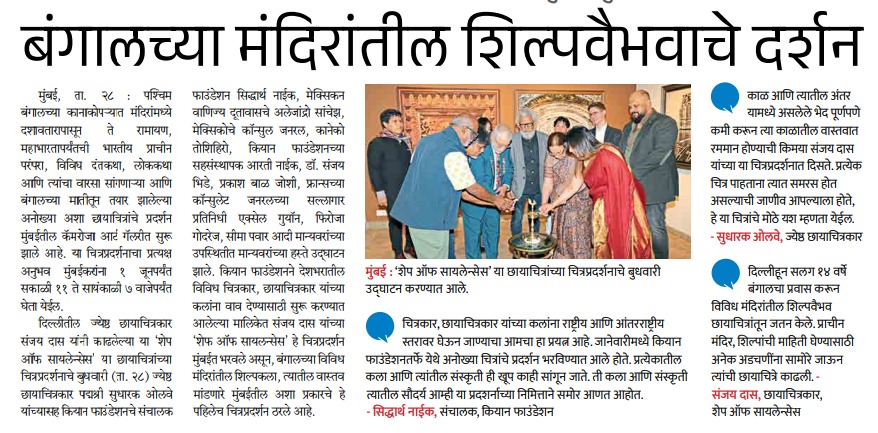
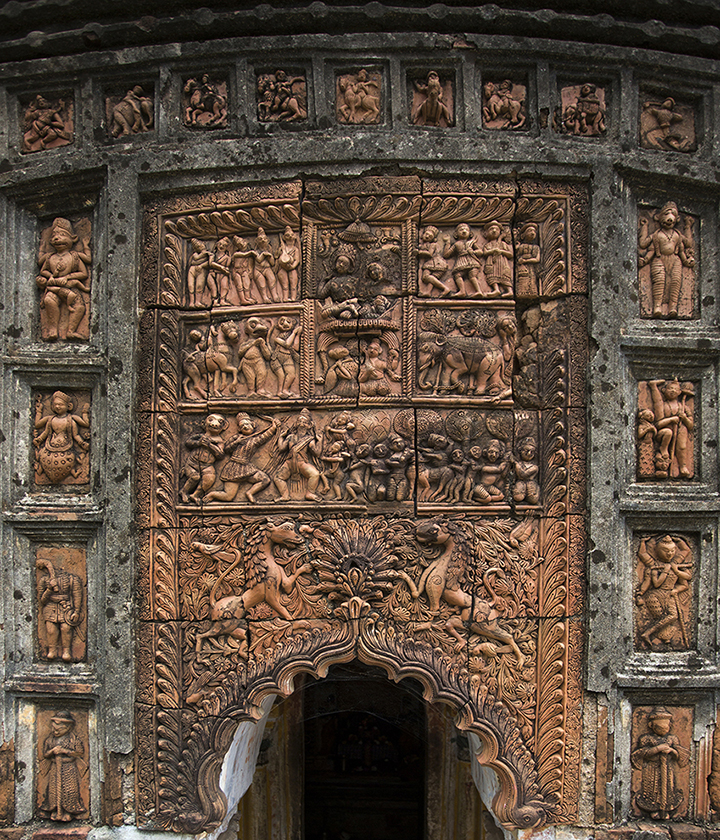
The terracotta temples that became his primary subject were discovered serendipitously, when the ‘Naachnee’ he was filming asked if he had seen them.
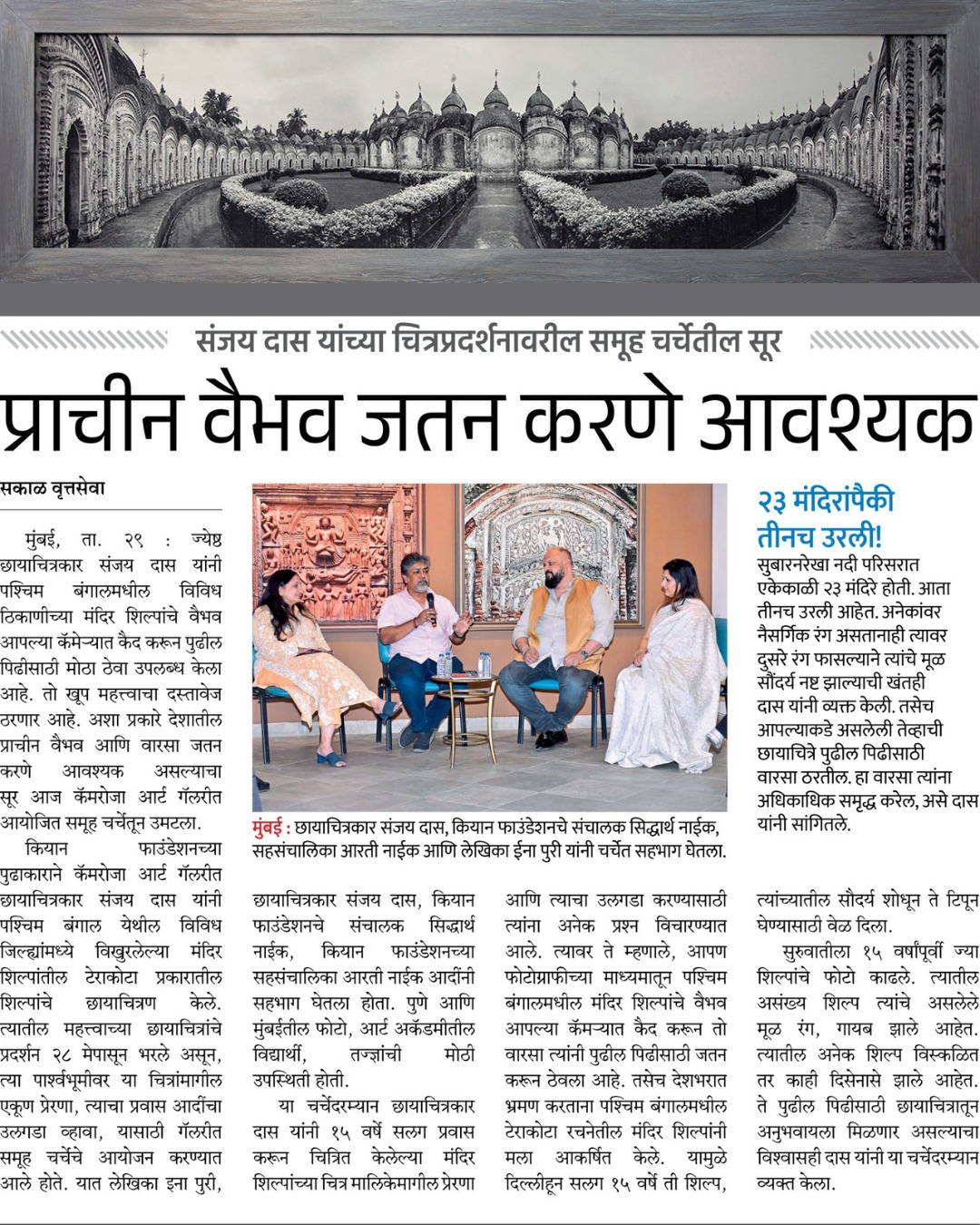
Over the decades he photographed these medieval structures, learning their design and layout, the façades carved in great detail. He returned again and again to Murshidabad and Bishnupur, following trails to Gaur, Pandua and other mofussil towns, each complex patterned with deities, men, women, animals, apsaras and geometric ‘alpanas’.
Like a man possessed, he began regular drives from Delhi, mostly alone, at times with his artist wife Shampa, to the distant corners of Bengal.
Unbeknownst to him, these monuments were landmarks of my own childhood; my maternal grandparents lived in Murshidabad. When I chanced upon his photograph taken there at a group show, I stood before it in amazement. Our dialogue began at that point and continues, reclaiming a place tied to memory for both of us, for different reasons.
— Ina Puri, Independent Curator, Writer & Collector
I stood at a crossroads: danger, and the irresistible pull of capturing something rare and ethereal. With a deep breath and a prayer on my lips, I scrambled through the shrubs, one eye on my viewfinder and the other on my surroundings. I emerged with images of the temple complex, glimpsed through the entwined filigree of overgrown roots — a hauntingly beautiful testament to how time reclaims even the most magnificent structures.
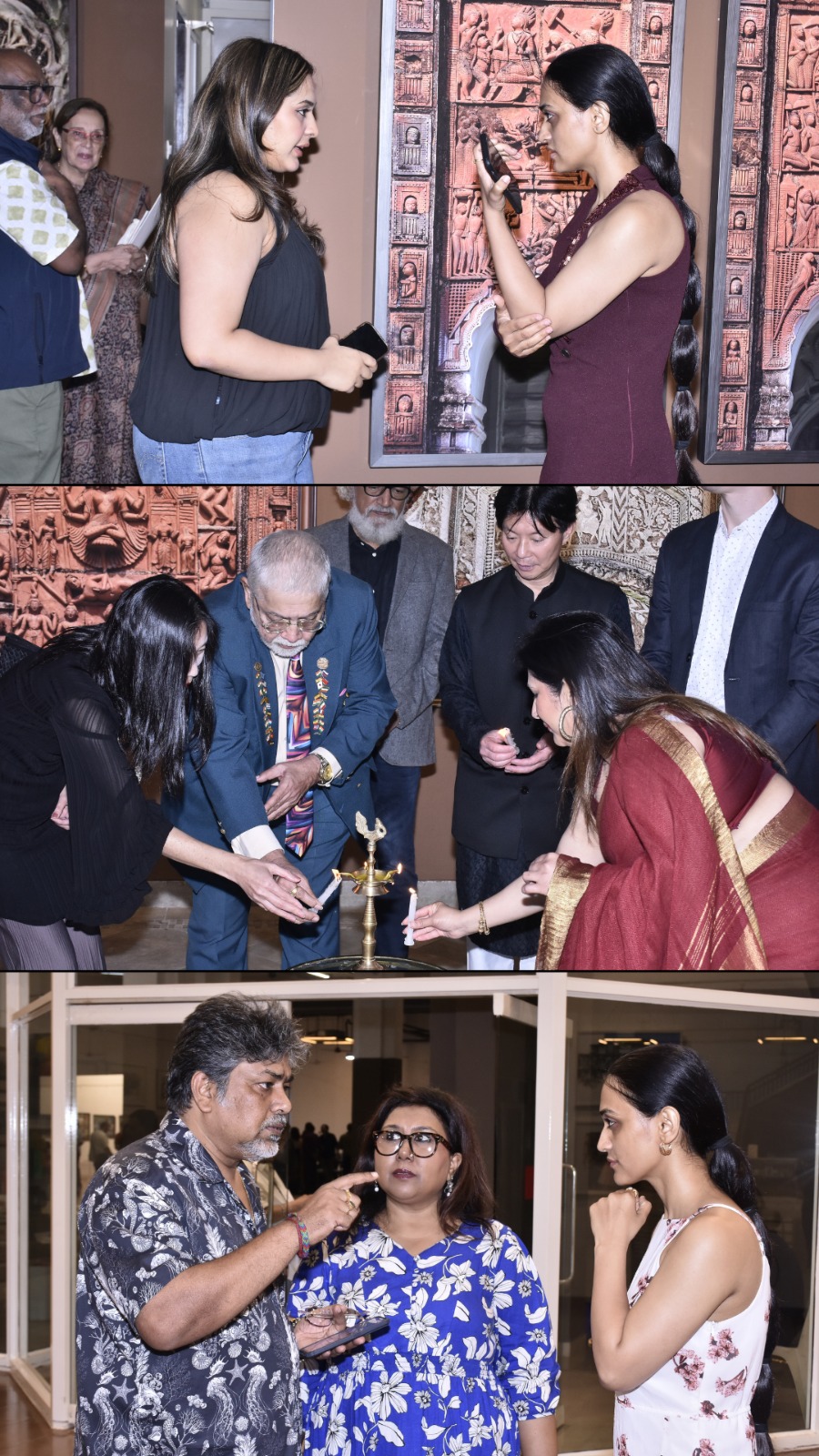
The lamp is lit
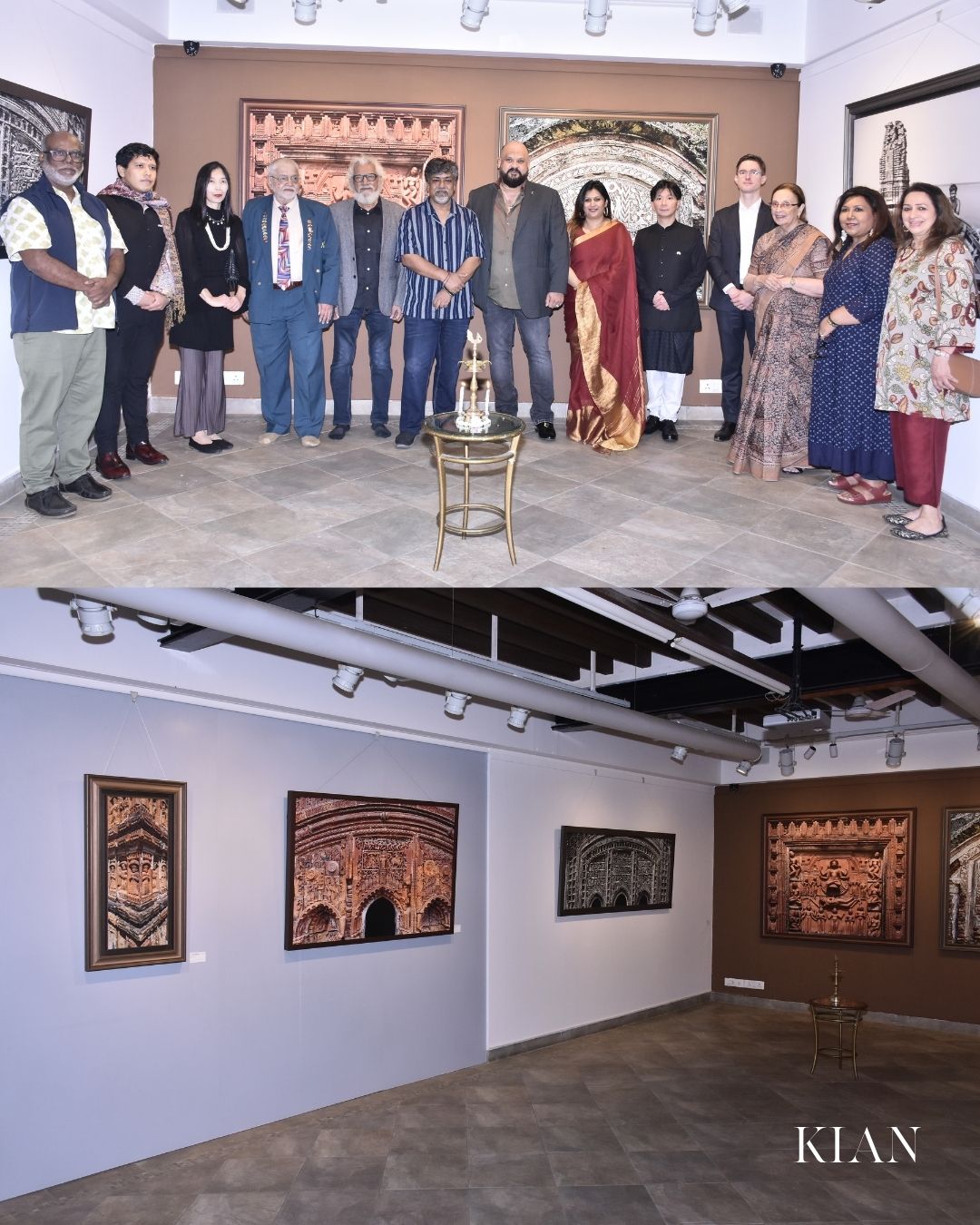
On view till 1 June 2025.
Behind the exhibition
In the news